
 Book a session
A diagnosis of pre-diabetes or Type 2 diabetes often comes with overwhelming restrictions: cut all carbohydrates, give up fruit, and eat bland boiled food. In reality, an effective diabetes diet plan is not about starvation or extreme deprivation. It is about understanding glycemic load, meal sequencing, and how to pair traditional Indian staples so your bloodstream receives steady, sustained energy rather than steep glucose surges.
Understanding the Glycemic Impact of Indian Meals
Traditional Indian diets are naturally rich in pulses and vegetables, but modern habits have skewed plates heavily toward refined carbohydrates — large mounds of polished white rice, refined maida rotis, deep-fried snacks, and sugary chai. When high-glycemic carbohydrates enter the digestive tract without adequate fiber, protein, or healthy fats, blood glucose skyrockets within 30 minutes, triggering high insulin output and subsequent crashes that leave you fatigued and hungry.
Over time, this chronic cycle raises your three-month average blood glucose marker (HbA1c) and increases risks for cardiovascular and microvascular complications.
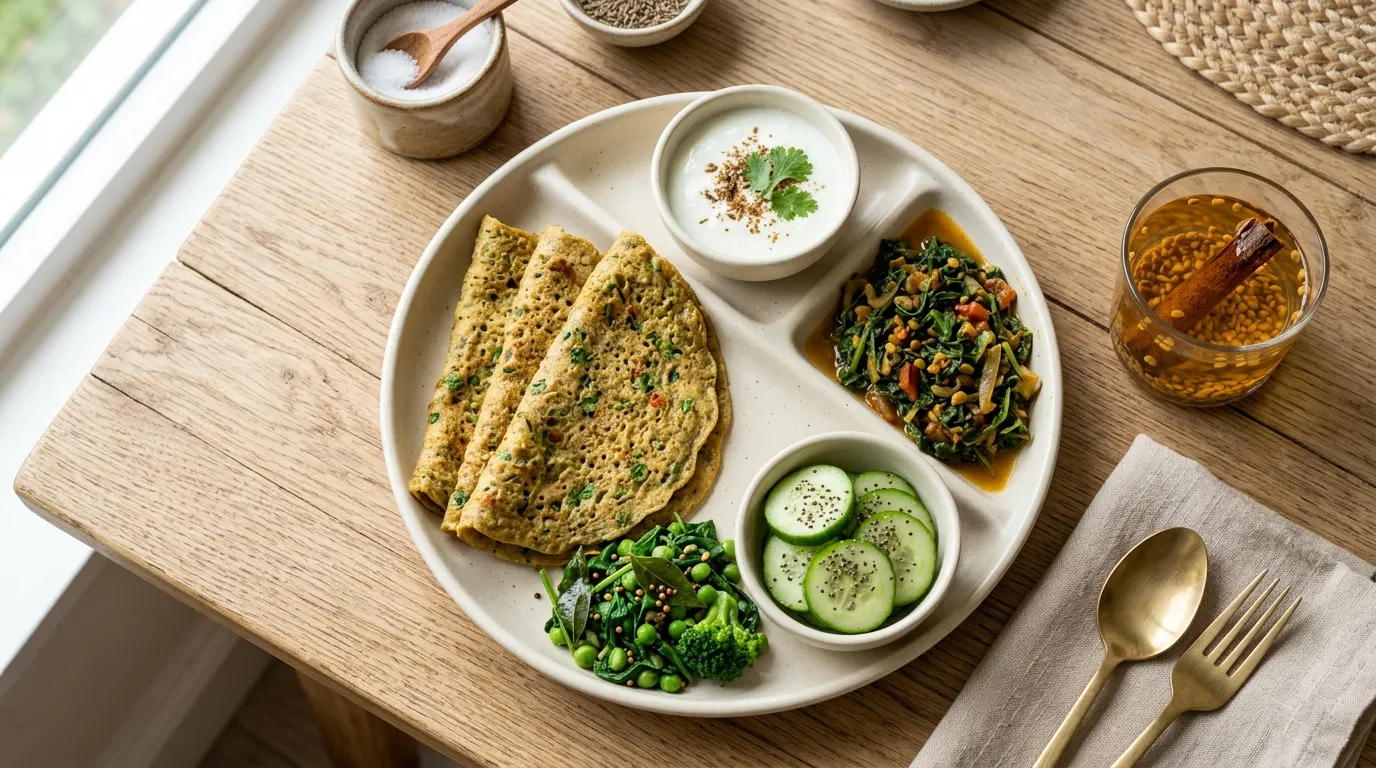 Balancing complex carbohydrates with bioavailable protein and soluble fiber buffers postprandial glucose spikes.
The Clinical Plate Method for Diabetes
The most reliable, sustainable way to structure your meals is the Diabetes Plate Method, adapted for Indian home cooking:
1. Half Plate: Non-Starchy Vegetables
Load 50% of your lunch and dinner plate with fibrous, non-starchy vegetables such as spinach, methi (fenugreek leaves), bottle gourd (lauki), ridge gourd (tori), bitter gourd (karela), cauliflower, and bell peppers. These provide vital antioxidants and viscous fiber that coats the intestinal lining and blunts glucose absorption.
2. One-Quarter Plate: Quality Protein
Dedicate 25% of your plate to protein. Excellent vegetarian choices include whole green moong, kala chana, rajma, low-fat homemade paneer, and sprouted lentils. For non-vegetarians, grilled eggs, chicken breast, or fish provide lean amino acids without elevating blood sugar.
3. One-Quarter Plate: Complex Low-GI Carbs
Reserve the remaining 25% for slow-digesting carbohydrates. Choose unpolished whole grains like barley (jau), sorghum (jowar), pearl millet (bajra), and bran-enriched whole wheat flour over refined staples.
4. Smart Meal Sequencing
Research shows that the order in which you consume food significantly influences post-meal glucose spikes. Eat your salad and vegetables first, followed by protein, and finish with carbohydrates. This simple behavioral change can lower postprandial glucose by up to 30%.
Sample One-Day Indian Diabetes Diet Plan
- Morning Ritual (7:00 AM): 1 glass of lukewarm water with 1 teaspoon of overnight-soaked methi seeds (chewed thoroughly) or cinnamon bark water.
- Breakfast (8:30 AM): 2 small vegetable moong dal cheelas prepared with minimal cold-pressed mustard or olive oil, accompanied by homemade mint chutney and half a cup of unsweetened curd.
- Mid-Morning (11:00 AM): 1 small seasonal low-GI fruit (such as a green apple, guava, or a slice of papaya) along with 4-5 soaked almonds and 2 walnut halves.
- Lunch (1:30 PM): A fresh bowl of cucumber and carrot salad eaten first, followed by 1 jowar or missi roti, 1 bowl of thick dal, and 1 generous portion of cooked seasonal greens (like sarson or palak).
- Evening Snack (5:00 PM): A cup of green tea or masala chai (prepared without sugar) paired with roasted chana or boiled sprouts chaat.
- Dinner (8:00 PM): Light and early — a bowl of vegetable dahlia with paneer cubes or a nutritious bowl of vegetable and lentil soup with a small portion of salad.
Common Diabetes Myths Debunked
- “Diabetics cannot eat any fruit”: Whole, fresh fruits with edible skin (like apples, pears, and berries) contain fiber, polyphenols, and essential vitamins. Avoid packaged fruit juices and canned fruits with heavy syrups.
- “Jaggery and honey are safe substitutes for sugar”: While jaggery and honey contain trace minerals, their chemical composition is still predominantly sucrose and fructose. They spike blood glucose almost identically to white table sugar.
- “Skipping dinner lowers morning fasting sugar”: Skipping meals often causes the liver to release stored glucose overnight (the Dawn Phenomenon), resulting in paradoxically higher morning fasting numbers.
Reversing Insulin Resistance with Clinical Dietetics
Type 2 diabetes and pre-diabetes are largely manageable — and often reversible — through systematic lifestyle intervention. At Dietitian Shreya’s Family Diet Clinic, our team formulates personalized dietary guidelines based on your continuous glucose trends, fasting insulin levels, renal function, and daily schedule.
Take control of your HbA1c today. Book a personalized diabetes consultation to start an individualized, clinically guided recovery plan.